• Home
  • Authored and Edited Books
  • Articles and Chapters
  • Book Reviews and Notes
  • Other Professional Writing
  • In Progress
  • Contact

Steven Michels

  • Irregardless of the Pandemic

    July 7th, 2020

    While the New York Times reports on faculty who are reluctant to go back to the classroom for health reasons and Inside Higher Ed adds the decision-making process to the mix, the more interesting objections come from a pedagogical perspective. 

    Kevin Gannon writes about our prejudice for face-to-face instruction. “Students do not learn simply because they are physically present in the same space as other students and the instructor,” he argues in an excellent blog post, titled “The Summer of Magical Thinking.” As John Warner puts it, “I am among the crowd who both believes that online learning can be done quite well, and that there is something irreplaceable about the experiences of face-to-face learning, when that learning is happening under reasonable conditions that is.”

    It will be tragic if we lose an opportunity to reimagine and improve higher education and advance the online experience, in our attempt to do the impossible with an on-ground semester. Instead of a leap forward, AY20-21 could very well be a lost year, which would match what other sectors of the economy (sports, theater, music, etc.) are also about to experience.

    Everyone is eager to get back to the classroom once things return to normal. But the chances that our mitigation strategies are insufficient seems quite high. Not returning after Thanksgiving seems to be the norm, but we’ll be lucky if we make it to mid-October, before we realize that campus life is simply unworkable.

    The only thing we know for sure is that spring will be easier since we will know more about what works and what doesn’t. Since nothing is likely to change between now and January, other than the onset of flu season, we’ll probably just all be online from the start.

    https://twitter.com/7eandra/status/1276691277636087808


    More Coronavirus News
    Penn State announced yesterday that one of its students, Juan Garcia, died due to coronavirus-related respiratory issues. Juan was only 21 years old.

    Students at the University of Alabama are, inexplicably, having Covid-19 parties. The University of Washington system reported over 100 positive cases after an outbreak in the Greek system. And the University of Georgia remains a hot spot, with 143 cases reported there so far. 

    Over 700 faculty at Georgia Tech have written a letter to the Board of Regents against the institution’s plans to reopen in the fall, which include mandatory masks for faculty but not for students.

    Cait S. Kirby, a doctoral student in biology at Vanderbilt simulated a day in the life of a student on campus in the fall, which went viral, especially among faculty. Spoiler alert: it’s not pretty. Meanwhile, researchers at Cornell contend that an online semester there could actually cause more infections, as it loses the ability to control and monitor student activity. 

    A summary of research on online teaching, mentioned in Forbes, of all places, found that online courses should have no more than twelve students in them. They also propose limits of 18 and 17, for unground and blended models, respectively. Bring this up at your next faculty meeting.

    Two schools, University of South Florida and Western Carolina University, have instituted policies against refunds for room and board, should the dorms close. It seems rather tone-deaf not only to economic matters, but also to the health crisis. It also gives students a large reason to take their tuition dollars elsewhere.

    https://twitter.com/astrokatie/status/1278649818890502144?s=12


    Quick Hits
    The University of Bridgeport in Connecticut will soon be closed. The programs and grounds will be acquired by Goodwin University, Sacred Heart University, and the for-profit Paier College of Art.

    The City University of New York has laid off 2800 part-time faculty, or 25 percent of its total pool, to go along with a 25 percent reduction in its course offerings.

    Florida State has reversed its silly policy prohibiting parents from parenting while working at home. The policy, which has been removed from its website, originally read: “Effective, August 7, 2020, the University will return to normal policy and will no longer allow employees to care for children while working remotely.”

    Boise State has cut its baseball and women’s swimming and diving programs, for budgetary and coronavirus-related reasons.

    The Webster-Merriam dictionary has added “irregardless,” which is a huge blow to grammar Nazis and a boon to everyone else. Thankfully, it denotes it as “nonstandard,” so all is not lost.

    Resources
    The most recent episode of the Teaching in Higher Ed podcast, with Maria Andersen, focuses on strategies for the fall. EdSurge has a nice article on how faculty are planning for the return to the classroom. And TeachThought has a nice collection of verbs for digital learning. Love those verbs!

    https://twitter.com/Gold_Dana/status/1274383365031055360

    Required Reading
    As a break from the terrible news and social unrest, go read Ksenya Kiebuzinski’s essay on the virtue of paper books and libraries—a great casualty of the pandemic.


    Let’s have a great class!

  • Models Good and Bad

    June 29th, 2020

    With regard to planning for the fall, researchers at Georgia Tech concluded that to maintain proper distancing, most classrooms cannot be 40-50 percent full, but more like 15-30 percent full, which questions the plans for many institutions looking to simply have a blended mix of online and on-ground class meetings. 

    More optimistically, professors at Swarthmore College and the University of Pennsylvania have authored a working paper on what could happen on campus come fall. With a full slate of mitigation measures (universal mask wearing, daily testing of three percent, contact tracing, quarantine, and no large classes), the number of positive cases could be kept negligible—below 66 for a population of 22,250. Without any intervention, unsurprisingly, the coronavirus would spread to all susceptible people by the end of the semester, with the peak coming 20-40 days in. 

    As an early hot spot for the virus, New York City was among the hardest hit. The City University of New York has been devastated by at least 38 deaths during the pandemic. 

    The summer should be a time for colleges to clear out and rid themselves of the virus, but the University of South Carolina has seen a surge of new cases. Data reveals that young people have been behind the recent uptick in cases and hospitalizations.

    Heidi Li Feldman, a professor of law at Georgetown, penned an op-ed in the LA Times urging students, faculty, and staff not to sign any waivers from schools looking to avoid liability for what may happen once classes resume in August. “Whether compelled, pressured or lured into coming on campus,” she writes, “students and employees should explicitly inform relevant administrators that they are in no way surrendering their rights to hold schools accountable for sloppiness in safeguarding their health.”

    For a lighter read, see McSweeney’s and what Juliana Gray has to say about planning for the fall and our “magical thinking”—in short, “Our university will proceed as if everything will be okay because we really, really want it to be.”

    https://twitter.com/erobbprincipal/status/1274725839637295117?s=12


    Closings and Cuts
    The next year or so is certainly going to see an uptick in the number and rate of acquisitions, mergers, and closings. Concordia University Northeast Portland closed last week, stunning its nearly 5000 students and 1500 faculty and staff. Concordia University School of Law, which was established in 2007 by Concordia University Portland, has been shuttered, forcing the 89 students who were part of last year’s class to find another home.

    Elsewhere, on Thursday of last week, Mim L. Runey, chancellor of Johnson and Wales University, announced the Providence, RI-based institution was closing its Denver and north Miami campuses next summer. In anticipation of an $8.4 million budget gap, the University of Michigan at Flint let go of 123 of its 300 lecturers. And in response to budgetary considerations, Chicago’s St. Xavier University will no longer recognize its faculty union.

    Economics
    A working group created by the nonprofit Opportunity America has published a report on how community colleges could work to revitalize the pandemic-savaged economy. Its recommendations include attention to adult learners, more professional development, and creative credentialing models.

    Park University, a private nonprofit university with headquarters in Missouri, is offering online “gap year” classes, $2200 off its normal $9000 sticker price. It’s a wonder that more institutions have not moved more aggressively into this space.

    https://twitter.com/laurenrosaaa/status/1272566058671620104


    Social Justice
    The University of Virginia has denied the tenure applications of two Black scholars,raising questions about diversity issues at the institution, where the percentage of Black faculty is lower than the national average, four and six percent, respectively. It also raises questions in the academy more generally about equity and the value of “objective” measures for hiring and promotion.

    In better news, the University of Florida has announced that it will put an end to using unpaid inmate labor. The University has used over 156,000 hours of such labor in the past five years. President Kent Fuchs called it “Another step toward positive change against racism.” The fact that “inmate” is understood to have racial connotations shows how far we have to go to address institutional racism.

    Many institutions are in the difficult position of having to rescind admissions decisions from students who have been found to say racially incentive things on social media. No one is guaranteed admission and we need to be mindful of the climate we create on campus; on the other hand, many see such decisions as flying in the face of educational missions of, especially public, institutions, where the First Amendment might be applicable. To put it bluntly, if we don’t educate racists, who will?

    Rafael Walker cautions senior leaders against empty gestures of racial solidarity, which can be insulting or even make matters worse. As she puts it, “If your original affirmation and the reaffirmation after that didn’t yield change within the institution or the larger society, what on earth makes you think — or should make us think — that this fresh reaffirmation matters?”

    https://twitter.com/onphileek/status/1276154776200282117?s=12


    Technology
    Instructure, the company behind Canvas, has appointed a new CEO, Steve Daly. There’s no word on what his plans for the growing platform might be, although addressing LMS Bridge, its faltering corporate platform, seems likely.

    Microsoft continues to make advances if not market headway with Edge, its new Chromium-based browser, including speedier performance, better privacy, and more tab control options.

    For its part, Google, the company behind the Chromium web-engine that powers its Chrome browser, launched Keen, a Pinterest competitor, which could be handy if you’re looking to curate course material by yourself or with your students.


    Required Reading
    Poet and educator Caroline Randall Williams has penned a powerful must-read essayin the New York Times, which begins with the stunning line, “I have rape-colored skin.” Read it, read it again, and share it widely.


    Have a great class!

  • Black is the New Black

    June 22nd, 2020

    Coronavirus
    Clemson University, which is in the first phase of a reopening, announced on Friday 25 new cases of coronavirus, for a total of 28, mostly student-athletes and some staff. It’s the largest outbreak since the country has moved to reopen. This came on the same day that South Carolina reached its highest one-day total for new cases. On Thursday of last week, 13 football players the University of Texas at Austin tested positive.

    Apart from the wisdom of having football be a part of such an early phase, it doesn’t bode well for the fall, especially if contact sports are seen as such an essential activity.

    Grammar
    In social justice and grammar news—don’t you wish we had more of those!—the Associated Press has modified its usage manual to capitalize the b in “Black.” As John Daniszewski, AP’s vice president of standards wrote in a post, “The lowercase black is a color, not a person.” 

    “Indigenous” will also receive a capital I when referring to original inhabitants of a place. “White” will stay the same, for the time being, while further changes are considered.

    Planning for the Fall
    Matt Reed has penned an opinion piece on The Chronicle‘s inattention to community colleges and their plans for the fall.

    In terms of your own plans, keep in mind that when you’re in class you could have students help. For example, you could stream a video of your lecture using Zoom and have a student sitting at her or his desk working the camera or monitoring the chat. It might require a bit of creativity, but there are many simple workarounds for how to manage it all.

    https://twitter.com/ashleyrattner/status/1273758084276596737

    Microsoft Stream/video recording
    For those of you working in the Microsoft 365 ecosystem and needing to create quick video announcements or micro-lectures to share with your class, you can now do a screen, video, or video-in-screen recording directly from your browser into a channel on Stream, Microsoft’s video sharing platform. Recording videos has never been easier. Mike Tholfsen has made a quick tutorial.

    Stream offers plenty of permissions options and closed captioning and you can opt to have comments turned on or off, depending on how you plan to use the videos. And it is more private and secure than YouTube.

    Teaching Moment
    German Lopez, at 
    Vox.com, an excellent “explainer journalism” website, compiled a list of nine different reasons why the phrase “all lives matter” is insensitive. It includes Kris Straub’s, quite well-known, house-on-fire cartoon, along with video testimonials and other writing.

    In addition to a powerful lesson about Black lives and the movement, it could also be used as a template for assignments where students are asked to put together a similar collection in defense of a position.

    While you are scrutinizing your syllabus to make sure that it captures the moment we find ourselves in, Ciarro Jones suggests that we might need to look a bit deeper: the disciplines themselves. “Now is your time,” she urges, “to put your scholarship where your mouth is.”

    Have a great class.

  • Reimagining the Syllabus

    December 4th, 2017

    Faculty can be very particular (even precious) about a course syllabus, but sometimes in all the wrong ways.

    Many view the syllabus as a firm contract and a laundry list of every particular variation and question that might ever occur to a student during the course of a semester. This was the rationale behind the “Death to the Syllabus” article—a favorite of mine. Most syllabi are too long and too detailed.

    You could imagine how for a student being handed a massive tome could be like being dropped into the deep end of a pool—or even five pools at once, assuming a full course load. Typically, this approach means that going over the syllabus then becomes the primary objective for first meetings. A recent innovation related to this view is having students take a quiz on the syllabus on the first day of class.

    This is not very good use class, especially the valuable time related to first impressions. It would be much better to spend it getting to know your students and what interests them related to the course material. It’s also a time when you can inspire them and get them excited about what you’re going to do together. Anything you can do to get them curious or have them come to understand anything about what they don’t know is better than walking through your policy on late papers.

    In place of legalese, it would be better for syllabi to sound like a document designed to promote learning. Thinking of the syllabi in terms of opportunities and promises rather than penalties and threats is a good first step.

    A syllabus should not be an exhaustive handbook about every question a student could possibly ever have—not if you want students to actually read it, that is. A syllabus should be an outline of the most important aspects of a course, especially regarding policies and expectations. It should be big picture and present the course outline in broad strokes.

    The finer points of most assignments can be made known as needed. There is no reason, for example, why the font style for a project that will due in three months should appear in a syllabus. That, to put it mildly, is somewhat crazed. Moreover, it would be a shame if, in the attempt to forge an ironclad contract, you neglected to leave room for the grand messiness of learning.

    You should also take some time to think about how your syllabi will be presented. That too is an opportunity to engage your students.

    An e-syllabus means that we can use URLs to resources and policies rather than spelling them out, which saves a great deal of space and redundancy. Using Google doc or a website with hypothes.is would let your students annotate or comment on it as you go along.

    I’ve gone from printing it out to just sticking it on Blackboard to actually giving some thought about presentation and how that impacts the learning experience. Here’s the syllabus I used for this semester.

    Regardless of the course, it’s better to imagine the syllabus as the start of a conversation about how a learning community does its best work.

  • Seven Coursework-related Questions for Students

    September 17th, 2017

    Professors almost always know what they are looking for in assignments, but sometimes they’re not always as clear students need them to be. 

    One secret to being successful in college is asking the right questions, especially with regard to coursework. Here are some to keep in mind.

    1. ”How will this assignment be evaluated?”
    The criteria for every assignment should be clearly spelled out, sometimes with a rubric that details the components of excellent work. Knowing exactly what the professor is looking for will help you stay focused on what is important.

    2. “Are there examples?”
    Professors sometimes offer examples from previous semesters for what an assignment should look like. If one is not provided, you can ask. Some professors have been known to do the assignment themselves, which can be very insightful. Among instructors, the practice is called “eating your own dog food.” Yum.

    3. ”Are there limits on…”
    Students have no difficulty asking questions about minimum expectations—related to pages/words, sources, etc. But the upper-limits are equally important, if not more so. Chances of getting full credit by doing the minimum are pretty slim. Doing well often requires going beyond the minimum expectations, but you always want to stay within acceptable parameters.

    4. “Can we spend more time going over this?”
    Some assignments, especially complex ones, might assume that you know how to do what is being asked of you. If there is any part of an assignment you do not feel prepared to do, you should ask to spend class time on it.

    5. “Can I show you an outline or draft?”
    Professors will always appreciate the opportunity to help you with an assignment. Sometimes a three-minute office visit might give you the one piece of advice that makes your work go from good to great. That said, you should avoid simply sending your work in an email or expecting quality feedback at the last minute. You should also not assume that professors have time before or after class to give you the amount of attention you might require. 

    6. ”Can I submit a revision?”
    Grades are important measures of where you are at the moment, but the feedback you receive is the key to performing well on the next paper or exam. If there’s anything about the feedback that you don’t understand, you also need to make an appointment for office hours. If a professor ever offers an opportunity for revision, you should take it, regardless of how well you did. Even if it doesn’t mean a change in this grade, it might very well mean an improvement on the next one.

    7. ”Is it OK if I have an extra day?”
    Professors have different takes on deadlines. Some are very flexible; some are not flexible at all. In any event, if it’s ever necessary that your work will be late, you need to let your professor know in advance and in person, if possible.  

  • Choose Your Own Adventure

    August 7th, 2017

    This is the syllabus I put together on padlet for my class this semester.

  • ‘I Love Learning; I Hate School’

    July 18th, 2017

    Susan D. Blum, a professor of anthropology at Notre Dame, has written a fascinating and stark study of higher education.

    The short answer for why so many young people dislike college is that it’s too much like school and not enough like learning.

    The artifice of school has displaced our natural love of collaborative learning and shared exploration, she contends. School is more like an assembly line or an obstacle course than a sandbox or canvas.

    At the same time, most professors love school not because of any intellectual superiority, but because they have succeeded at school despite the way in which it circumscribes learning and sucks the joy out of it. Putting them in charge makes a bad system worse.

    In one of the most penetrating sections of book, Blum lays out a schematic of higher education’s component parts — including how students are admitted, how courses are designed, and how grades are assigned. Taken by themselves many aspects of higher ed seem curious or even irrational, but Blum’s point is to illustrate how interconnected everything is. That makes even small changes unlikely, and it makes radical departures from the norm nearly impossible. Moreover, the greatest obstacle to fixing school, we could add, might come from students, who have been so corrupted by the system that they resist any deviation from standard procedures, even ones that are exciting or beneficial.

    Blum offers little in the way of prescriptions, she admits, but does list a number of small interventions that can make school a little more prone to learning, including team- and project-based assignments, gamification, and real audiences for writing (through blogs, etc). Having students exposed to material before class (“flipping”) allows class time to be devoted to higher-level skills and more active learning. Instructors can also use contract grading and portfolios to minimize the fetish for grades over feedback.

    Students are also more likely to learn when the subject matter speaks to them. Simply put, “the more learning in school resembles the successful learning that is so abundant outside school, the greater the chance that some learning will take place.”

    Some might question Blum’s method, which is a bit narrow. She’s well steeped in the research and writing on higher education, but her data is mostly limited to students at Notre Dame. On the other hand, if her findings are accurate there — that is, at an institution where the percentage of successful students is relatively high — it’s probably even truer elsewhere.

    The book seems a little disjointed and meandering and maybe more like a journal than a book at times. But what it lacks in structure it makes up for in accessibility and engagement. Any full-time teacher will immediately understand where Blum is coming from and be able to follow her journey from a eager but frustrated teacher to one that understands her students well enough to meet them where they are.

  • Prensky on Pedagogy

    June 20th, 2017

    The talk of assessment of student learning outcomes has well established the important connection between student learning outcomes and coursework. It is essential that coursework prepare students for and ultimately give them an opportunity to demonstrate and master.

    What has been overlooked has been the connection to outcomes and objectives—that is, how we teach what we want students the knowledge, skills, attitudes, and behaviors in a particular course or module.

    Tucked away in Marc Prensky’s 2001 book, Digital Game-based Learning, is an excellent overview of the diverse means by which students should be taught. 

    For Prensky: 

    • We learn facts through questions, memorization, association, and drill.
    • We learn skills (physical or mental) through imitation, feedback, continuous practice, and increasing challenge.
    • We learn judgment through hearing stories, asking questions, making choices, and getting feedback and coaching.
    • We learn behaviors through imitation, feedback, and practice.
    • We learn processes through explanation and practice.
    • We learn about existing theories through logical explanation and questioning.
    • We learn to create and test theories through experimentation and questioning.
    • We learn reasoning through puzzles and examples.
    • We learn procedures through imitation and practice.
    • We learn creativity through playing.
    • We learn language through imitation, practice, and immersion.
    • We learning programming and other systems through principles and graduated tasks.
    • We learn observation through examples, doing, and feedback.
    • We learn speeches or performance roles by memorization, practice, and coaching.
    • We learn the behavior of dynamic systems by observation and experimentation.
    • We learn grammar through—how do we learn grammar?

    The first thing to notice is how often practice occurs. It suggests that, whatever you are teaching, you might want to consider having students spend more time practicing what you are teaching. 

    Learning effective research and information literacy skills, for example, is not something that can occur over the course of one research paper or maybe even in one semester. Students need the opportunity to go through the process many times before they will acquire the habit of academic research.

    As Prensky admits, his list is not designed to be exhaustive or authoritative, but it does go a long way to illustrating the connection between the what and the how of teaching.  

  • Seven Questions Students Should Be Asking about Writing Assignments

    December 1st, 2016

    The most common questions professors get about assignments have to do with the number of pages or sources and formatting. More seasoned students might want to know if they can “give their opinion” or if they can “use the word ‘I.’” 

    (For the record, students should always be able to offer their opinion, if by opinion they understand it to mean reasoned analysis. And yes, they should be able to use the word “I,” unless the result is language that is too wordy or too conversational, which it almost always is.)

    But here are the questions students should really be asking:

    1. What’s the verb?
    Bloom’s taxonomy of learning is a handy reference point. Is the assignment designed to evaluate understanding or is it a higher-order skill, related to analysis, comparison, or application? Short assignments probably expect only one of these aims, while longer ones might require a combination.

    When students understand the purpose of the paper is analysis, for example, they will realize that large chunks that are nothing but descriptive should be cut or trimmed. Knowing what to write often begins with knowing what to leave out.

    2. What’s the form?
    The five-paragraph essay refuses to die, even though it exists almost solely in classrooms. (I don’t recall ever seeing one in the wild.) It might be a convenient tool to help students understand the basic purpose of academic writing, but it should not be an end unto itself. Why we expend so much energy getting students to master a form that they will never be asked to replicate (even if they become academics!) is beyond me.

    Students need to know if they are free to break free from its shackles. If not, asking might make instructors who insist on using this format consider other approaches to improving student writing. 

    3. Can I write on something else?
    There are many reasons why a professor would want to assign a common topic. Sometimes it’s not to limit student choice, but to help students know what to write about. That said, if a student has an interest that is consistent with the objectives of the assignment, students should inquire about the possibility of writing on that, instead. It shows curiosity, initiative, and self-direction, which should be encouraged as much as possible.

    4. Can we work on this in class?
    Far too much time in class is wasted on things that could be done before class—having a professor walk through a textbook chapter, being the most egregious and perhaps the most common. It would be far better for students to do the prep before class and work through the more difficult material or activities when they can easily receive help. This is called “flipping the classroom,” and there is a some preliminary research showing it to be effective. 

    Even if an instructor is uncomfortable, unwilling, or unable to flip an entire course, merely spending one class period on a writing workshop will help students immensely. Students will learn a lot about the professor’s expectations from getting immediate and direct feedback, and professors will learn a lot about what students need by watching them work.

    5. Can I meet with you to talk about my paper? 
    Professors have strong opinions about drafts. Some require them, to avoid having to assign grades and give feedback on a pile of dreadful papers. Others avoid them like the plague, not wanting to grade everything twice. But even professors who refuse to look at drafts will almost always offer an office consultation. This is even more valuable—to get direction on a thesis, evidence, or the organization of ideas. Advice on introductions and conclusions are also essential to writing a good paper (and getting a good grade).

    Relatedly, students should get in the habit of having their colleagues read their writing. That’s what academics do. Self-evaluation is one of the hardest things a writer can do, so it shouldn’t come as a surprise that students are not great at it. What’s more, presenting writing as a social activity can go a long way to having students understanding writing as process, rather than product.

    6. Will you give us feedback on revisions?
    Professors sometimes give credit for revised work, in attempt to have students take their feedback seriously—as opposed to merely looking at the grade and going back to Snapchat or whatever fun thing they were doing. 

    What students ought to really be doing is revising work—even without the credit. This is the opposite of extra credit—gasp! What better way to let the professor know that you are serious about improving as a student. And since the revised paper will not be part of a pile, the quality of the feedback the student is likely to receive will be much greater than it otherwise would have been.

    7. Can we use contractions?
    Let me close with one minor stylistic pet peeve: the prohibition against contractions. There lurks in many college classrooms a nasty prejudice that somehow formal writing is stilted writing, with contractions being the worse offense. Contractions are not a sign of poor writing, but not using them is a barrier to appreciating the natural beauty and flow of the written word.

    If you’re not convinced, go watch the Coen Brothers 2010 remake of True Grit. It’s painful. No one talks like that, so no one should write like that. 

    In one activity, I have my students select an article from The New Yorker, The Atlantic, or The Economist and offer an observation about the writing style. (There are contractions aplenty.) After spending semester after semester reading b textbooks (where language and excitement goes to die), they are stunned by how alive the prose is. 

    “Can we write like this?” one student asked. “Not yet,” I responded.

  • What is Critical Thinking?

    November 28th, 2016

    Most college courses include “critical thinking” as a desired learning outcome. But what do we mean by the term? And why is it so important—for coursework and for life?

    “Critical” is derived from the Greek word krisis, which means “to separate.” When we think critically, we are pulling things apart to evaluate them, but we are also separating ourselves from our thinking (our interests and biases) to be better thinkers. 

    Sometimes that is easier said than done.

    Let’s take something easy to digest: sports. It’s easy to have a favorite team. Mostly, loyalties come from who your family favors and where you grow up. You can root, root, root for the home team, but if you are going to make a claim that any one team is better than another, you’re going to have to back it up with evidence. 

    There is a big difference between saying (1) the Cubs are the best team in baseball and (2) the Cubs are the best team in baseball because they had the best regular season record and went on to win the World Series. (Yes, that really happened.) Critical thinking can be directed toward others, but we need to be the most critical about our own views.

    Very quickly, however, invoking statistics (win-loss record, runs scored, etc.) becomes a discussion of the relative merit of one piece of evidence over another. The classic example of this is batting average, which was for far too long exaggerated. On-base-percentage (which also takes into account walks and being hit by pitches) is a much better measure of a hitter’s skill. 

    In academic settings, critical thinking is more than just remembering or understanding content or offering an opinion. It’s an essential skill that requires analyzing and evaluating theories and evidence; identifying biases and challenging assumptions; considering the consequences of hypothetical or counterfactual situations; developing new and probing questions; making informed decisions about complex problems; and applying knowledge to a new field or area and even creating new knowledge. 

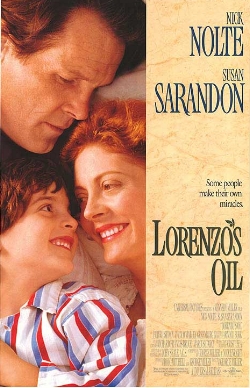
    A great example of critical thinking is Lorenzo’s Oil. The 1992 film documents the true story of Augustos and Michaela Odone as they attempt to find a cure for their son’s adrenoleukodystrophy (ALD), a fatal disease. The cure they discover, a combination of rapeseed oil and olive oil, is counter to the established medical wisdom of the time and resisted by most experts they consult. They eventually have seek help abroad to have their cure manufactured, and it ends up adding 20 years to Lorenzo’s life.

    Critical thinking is almost always radical because it goes “to the root” of things, which is why it is so essential to problem solving. Karl Marx, rather cynically, alleged that people can only see a problem once a solution is available. A more optimistic, if idealistic, version comes from John Lennon (from “Watching the Wheels”), where he sings, “there’s no problem, only solutions.” Marx and Lennon were both critical thinkers, but Lennon wrote better songs.

    Critical thinking is not always creative, but thinking critically is essential to the creative process, if by creativity we mean seeing things in a new light. Steve Jobs was a great critical thinker. “Sometimes when you innovate, you make mistakes,” he said to The Wall Street Journal in 1993. “It is best to admit them quickly, and get on with improving your other innovations.” For him, trial and error were essential, but so too was not letting biases stop him from throwing an idea overboard.

    Some people might be more naturally critical and independent thinkers, but everyone can improve their thinking. We especially need to be mindful about the undue deference we give to both experts and what is commonly held to be right or true. Social conformity and tradition are powerful obstacles to critical thinking.

    Even though our aim is more than content knowledge, knowing something is the first and most important step to critical thinking. We need to get in the habit of reading extensively and carefully and then giving ourselves enough time to know what it all means.

1 2
Next Page→

Website Built with WordPress.com.


Loading Comments...
 

You must be logged in to post a comment.

    • Subscribe Subscribed
      • Steven Michels
      • Already have a WordPress.com account? Log in now.
      • Steven Michels
      • Subscribe Subscribed
      • Sign up
      • Log in
      • Report this content
      • View site in Reader
      • Manage subscriptions
      • Collapse this bar